


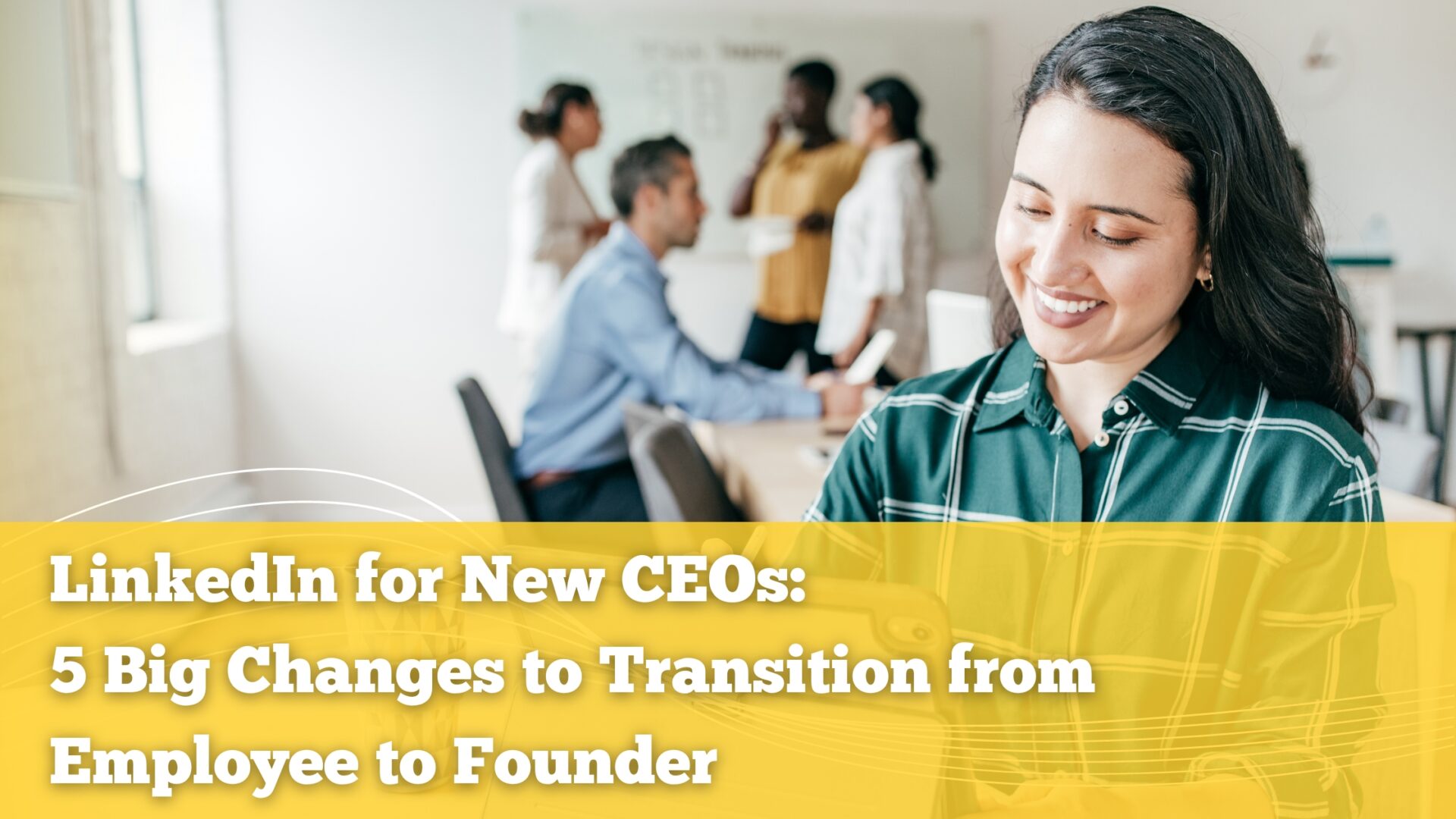
But one day, that all changed. She was laid off, and suddenly, she faced the daunting task of finding a new job in a tough market. Pouring over LinkedIn job postings, she had an epiphany.
What if she didn’t have to find a new job? What if she could create her own? The more she thought about it, the more excited she became.
But she knew that starting a business was easier said than done. She needed to communicate her vision and expand her network to include new people who could help her succeed. But how?
Here are five key changes to make on LinkedIn when you transition from employee to boss:
#1 Pivot Your Perspective
If you’ve thought of LinkedIn as a terrific place to find a job or learn about business and industry, you are right. But it’s so much more.
Start thinking of LinkedIn as a tool to communicate your vision to stakeholders: prospects, customers, employees, job candidates, prospective investors, and the media. They are all on the platform, which has more than 900 million members in 200 countries and territories around the world.
#2 Make Over Your Profile
Your profile needs to be updated in a big way. Don’t even think of simply adding a new job description to the Experience section. Instead, rework these key sections to reflect your new status:
- Headline: Rewrite it to include your new title, the problems you solve, the people you help, and maybe your superpower.
- Header Graphic: If you have a great photo of you doing what you do, use it! Or find a stunning image that conveys your energy and passion.
- About: Tell people what you are doing in your new venture, why that matters to you, and why they should do business with you.
- Experience: Add the new job, of course. But also update previous job descriptions to show how you won the expertise needed to achieve your current vision and why you will be successful.
Evaluate the rest of your profile and add any elements that will establish credibility, show early traction, and build momentum. Your LinkedIn profile will be prospects’ first encounter with you — make it work hard for you.
#3 Expand Your Network
Consider LinkedIn your personal portal of information about all things new business. Use its search and filter features to find influencers and potential stakeholders in your new venture.
When you find them, connect with and/or follow them. Connecting is ideal because it opens two-way communication, but following them is a good start. And, either way, click on the bell icon on their profile, so you’ll get notifications when they are active on LinkedIn.
Pro Tip: Use Google searches, too, because it’s likely that a person’s LinkedIn profile will be one of the first things listed in search results (just another reason you want your profile to make a great first impression when people are looking for what you do).
#4 Post About Your New Venture
As soon as your profile is updated, start posting about your new venture. If you are very early (pre-MVP), your posts should demonstrate your knowledge and insights in this area, the size and importance of the problem you are solving, the consequences of not solving it, and why your approach to solving it is better than the alternatives.
As you grow, shift your focus to traction, and tell stories about customer successes and the culture you are building. Be consistent and frequent — it’s hard to overcommunicate when you’re starting something new.
#5 Engage with People Who Can Help You
You need to engage with the people who are already in your network because that’s where most of your early customers, employees, and investors will come from. You want to maintain mindshare, educate them about the new venture, and let them see your momentum.
But don’t stop there! You want to reach beyond that to people you don’t know yet.
Do your research and engage with people who are respected by your stakeholders. That’s probably different people for each group, and you’ll find them by paying attention to what your stakeholders are doing on LinkedIn. Who are they following and whose posts do they engage with? You do the same because both groups (stakeholders and their influencers) will see your name and comments. This is the beginning of growing their awareness of — plus interest in and respect for — you.
Let’s Get You LinkedIn-Ready
Are you ready to make the leap from employee to boss? Deploy LinkedIn and its features as the powerful tool it is meant to be to launch and grow your new venture. Need help? Our team is here with expert guidance and services to get you there. Contact me at [email protected], or book a quick call to see how we can help you start making your new-business dreams become reality.