



If you haven’t heard of emojis, the digital ideograms used to express ideas or emotions to a reader, then two things are true:
First: You have been living under a rock, because even flip phone-using late adopters use the emoji’s predecessor, the emoticon, to “wink.” 😉
Second: You’re probably ahead of the game in your LinkedIn profile.
While emojis have a place in several forms of informal communication and on most social media platforms, using emojis in your LinkedIn profile is often negatively construed by the viewer.
Where Emojis Work
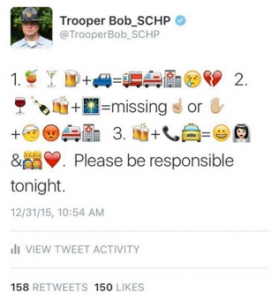
When you ask someone why they use emojis, they will often reply that they are a fun and quick way to communicate. Take a look at how South Carolina Highway Patrol Public Information Officer @TrooperBob_SCHP uses emojis to tackle the serious subject of drunk driving on Twitter:
Arguably more important than the fun and fast, emojis also convey the current emotions of the writer to the reader when the text is potentially ambiguous.
For instance, if you receive this message from your boss:
“Come to my office right now.”
How do you feel?
Nervous, right? Immediately you think you’re in trouble. (We won’t even discuss the aggressiveness of the period in that sentence.) But add an emoji to an otherwise anxiety-inducing phrase, and it changes the whole meaning:
“Come to my office right now. :)”
Whew. My boss isn’t mad at me and all is right in the world.
Emojis are great for messages on Twitter, Snapchat, Instagram, Facebook, and other types of informal communication such as Slack, one-off emails to coworkers, and telling your family you’re ordering pizza for dinner.
Why They Don’t Work on LinkedIn
LinkedIn is the outlier for emoji use, and for a good reason.
The entire purpose of LinkedIn is to present your most professional self to your peers, potential business partners, and future employees or employers. Adding emojis to your profile, especially in the headline, only detracts from your personal brand.
Do you add emojis to your resume? I would place my bets on “no.” Then why would you put them on your LinkedIn?
By adding emojis to your headline, which is for all intents and purposes your first introduction to a new potential connection, you’re saying a few things to the viewer:
- “I don’t know how to separate professional communication from personal communication.”
If you are searching for a job, this is a huge red flag. Sure, a snarkily placed emoji in your Slack chat at work is great. Putting an emoji in your LinkedIn profile indicates you potentially don’t know where to draw the line between fun with friends and your job.
- “I’m not serious.”
Emojis, as they are used currently, are most often employed by Millennials and Gen Z. If you are young, you risk being judged as not mature enough for serious work. If you are older, you are in danger of being judged for trying too hard.
Let’s take a look at an old, but good, example of a redacted LinkedIn headline. (This user has since changed their profile to remove the emojis.)
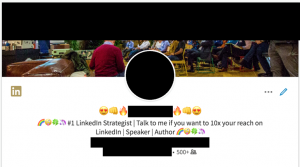
What does this profile say to you?
Well, for one, they really like emojis. But can you see past those to really take in the information in the headline? It’s difficult to wade through the sea of icons to really read what the person is saying professionally.
Emojis provide visual clutter when they are placed somewhere that doesn’t need emotional clarification. This ultimately diminishes the purpose of having a LinkedIn account: to get noticed by the right people for your professional expertise.
I don’t need to know that he or she is “overcome with the cuteness” of “fist bumping” “fires” or that “rainbows” drive them “crazy” for “lucky” “unicorns.” See how much can be lost in translation?
I’m spending most of my time using my emoji Rosetta Stone to decipher what all those colorful little symbols mean instead of focusing on the real reason I clicked on the profile: the person’s connections and professional clout.
Examine how your perception of the same profile changes when you remove the emojis:
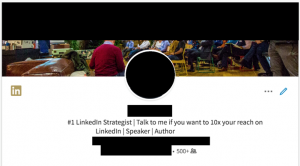
The header image is of the individual speaking at a conference. The header text says that this person is a speaker and an author. Now, that’s someone I could potentially respect as a thought leader in their field.
- “I’m not good at communicating across cultures or age groups.”
Did you know that emojis mean different things across age groups and in different countries? If you have potential clients or recruiters overseas, or more likely, in different age groups, you might be communicating an unintended or negative message if you use emojis.
A good example of a cross-cultural emoji communication breakdown is this:
“Your work is great :)”
This doesn’t seem ambiguous to a native English speaker, but including the smiley face in a message to a Chinese reader indicates you are being sarcastic. What was meant as praise quickly turns into an insult, and your professional relationship with the reader is now damaged as a result.
What Do You Think?
It is my professional opinion that emojis should be left out of LinkedIn profiles. Do you agree, or are emojis the lifeblood of your professional persona online? Leave me a message in the comments.