



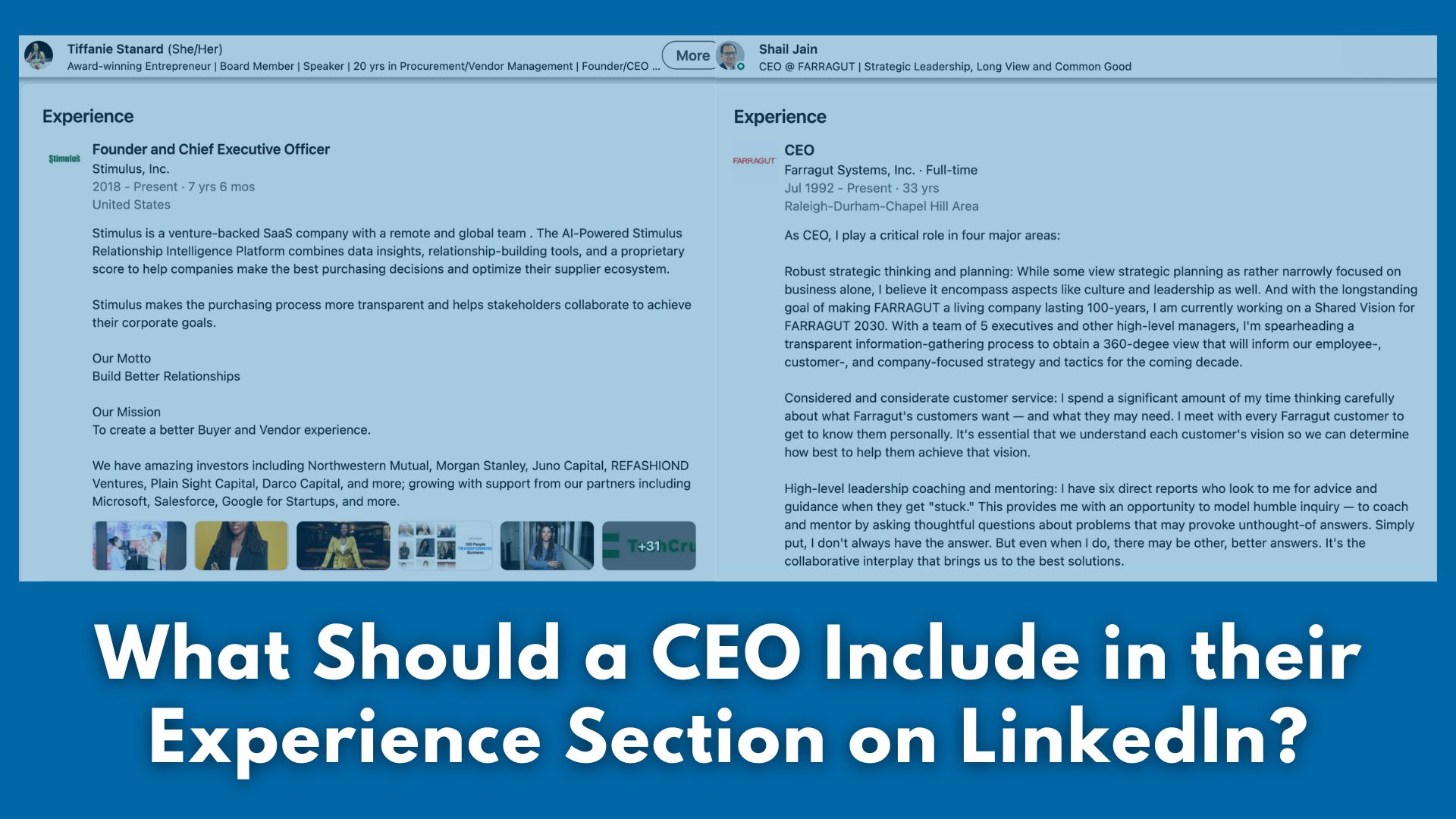
Your current role as CEO is the centerpiece of your LinkedIn profile.
When someone looks you up, they’re not just looking at your job title. They want to understand what kind of business you’re leading, how you approach the role, and what you’re building.
A well-written Experience section helps them get there faster. The more clearly you tell your story, the easier it becomes to attract the right people and move conversations forward.
Here’s what to include for each of your jobs, including your current role as CEO:
Key Takeaways:
- Your LinkedIn profile shapes how your business is perceived.
- CEO visibility today is part of governance and brand stability.
- Authentic visibility attracts all kinds of opportunities, not just sales.
- Your profile starts the conversation before you do.
- Consistency builds more trust than charisma.
Company Overview: Set the Stage
Start with a simple, one- or two-sentence description of the business:
- What your company does
- Who you serve
Unless your company is a household name, don’t assume everyone reading your profile knows what kind of business it is. A quick summary allows people outside your industry to understand what the company does and why it matters.
Your CEO Role: Share How You Lead
The CEO title is universally recognized, but every CEO approaches the role a little differently. This is your opportunity to explain how you personally define your leadership.
Your Experience section is where you talk about this specific business, right now. (Your personal career arc belongs in your About section.)
Consider including:
- Your vision for the company: What are you building? Where are you taking the business?
- Your core innovation: What differentiates your company in the market?
- Who you serve: Your customers, industries, or target markets.
- What you’re trying to accomplish: Are you launching? Scaling? Reinventing?
Give enough detail to help people see the business through your eyes.
Key Achievements: Show Progress and Impact
Next, highlight what you’ve accomplished so far.
You don’t need a long list. A few high-level milestones are enough.
- Revenue growth
- Funding raised
- Market expansion
- Major partnerships or customers
- Team growth and headcount
- Product launches or innovation milestones
Use real numbers when you can. Specifics make a much stronger impression than general statements like “significant growth” or “strong results.”
Prior Jobs
For earlier jobs, you can keep the description shorter. Include:
- What kind of a business it was
- The scope of your role, what you were responsible for
- The accomplishments you are most proud of
For bonus points, include what you learned while you were there, and how that contributed to who you are today.
Why This Matters
Your Experience section isn’t just about documenting your role.
It’s about helping people quickly understand what you’re leading, why it matters, and where you’re going. A strong, clear description builds trust faster – and sets you up for better conversations with the people you want to reach.
If you want help refining your profile so it works for you at the CEO level, we’re happy to help.