




As the CEO of a growing business, your personal brand matters.
Your employees trust you, believe in you, and follow your lead. You define the vision for the business; you make strategic decisions; and you are the one who gets everyone aligned and moving in the same direction. In short, your brand and reputation can ultimately have a massive effect on every aspect of your business.
The statistics back this up — according to a study conducted by Weber Shandwick (The CEO Reputation Premium), global executives attribute nearly half (45%) of their company’s reputation to the reputation of their CEO. Other significant benefits of positive CEO reputation include:
- Appealing to investors (87%)
- Gaining positive media attention (83%)
- Crisis protection (83%)
- Attracting new employees (77%). (One out of every two executives (50%) say that their CEO’s reputation impacted their decision to accept the position, and even more — 58% — say it keeps them at their current company.)
Benefits of a Strong Brand
You are the face of the company, meaning potential customers, prospects, investors, partners, job candidates, and the media research you online. By building a strong online presence, you put yourself in the driver’s seat, giving yourself the power to tell your story directly to stakeholders and:
- Build awareness – When you are active on social media, you attract prospects and partners who need the solutions your company offers.
- Gain media coverage – With a rich social presence, editors, reporters, and bloggers can more easily find you, identify you as a quotable resource, and reach you in time to meet a deadline.
- Speed funding – Make your traction visible to investors and allow them to see how well connected and respected you are.
- Recruit key players – The best people want to work for companies that are ahead of the curve. By using social media effectively, you make your vision and leadership skills more visible.
“A trusted brand is a buffer for your company in challenging times,” says Suzanne Bates, consultant, leadership expert, and author of Discover Your CEO Brand. “You get the benefit of the doubt. You can step in and change the conversation. You can cushion the blow. You can pave the way for a better outcome. A respected brand will help you win back another’s trust.”
Creating Your Personal Brand
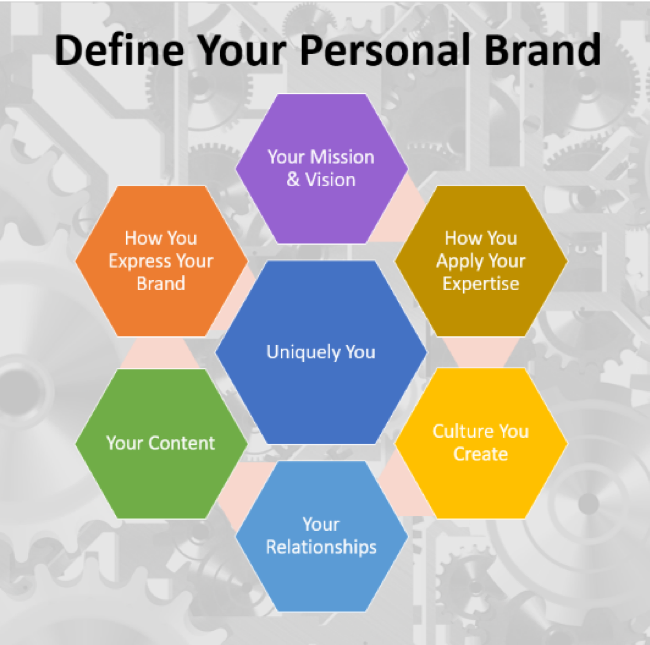
Creating a strong and authentic personal brand doesn’t happen overnight, and if you wait until you need it, it’s too late. Start now with some simple steps.
Begin by asking yourself: What do you want to be known for? What sets you apart from others in your field? What do you want to educate people about? How would others describe you?
“The core of your brand is what’s inside you — the ideas, principles, and values that you live by,” says Bates. You already know this, so make a list of what’s important to you and let that serve as a road map.
- Your Mission & Vision
- Your Expertise
- Culture You Create
- How You Express Your Brand
- Relationships
- Content
Then research like-minded people who have created a successful online presence and follow them on LinkedIn or Twitter. Take note of why they speak to you, what they’re doing that’s successful, and what you wouldn’t want to emulate.
Think about how you want your audience to feel and how you want your brand to evolve as it grows. Most importantly, be genuine and be yourself — an authentic personal brand will follow.
Want some advice about how to get started? Schedule a free conversation, and we’ll talk about where the value might be for you and some good first steps.