



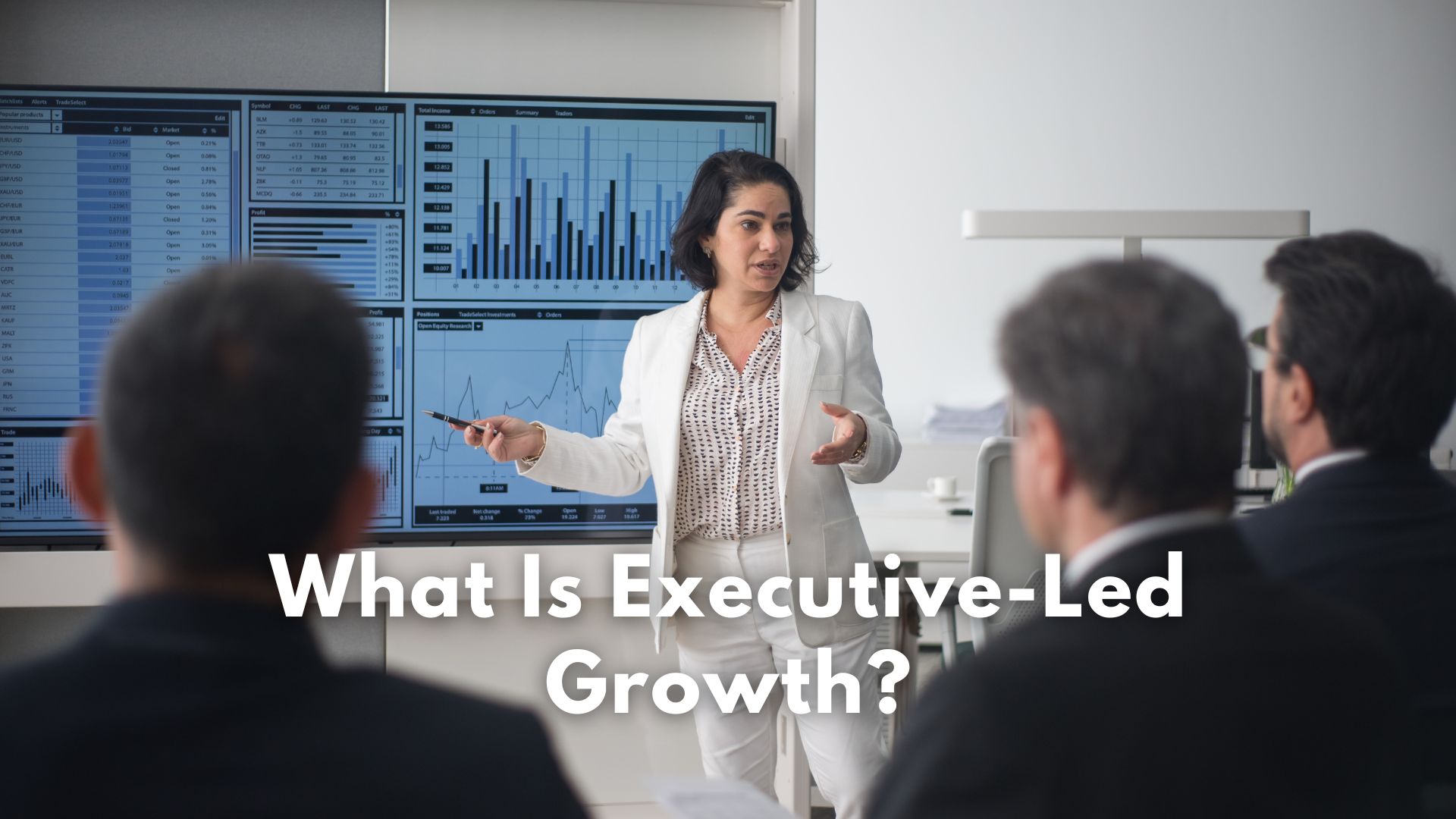
Have you heard the term executive-led growth?
Executive-led growth describes a modern B2B dynamic where company growth increasingly flows through the credibility, visibility, and voice of senior leaders, especially founders and CEOs, rather than through brand marketing alone.
Executive-led growth rests on three core elements:
Industry leadership narrative
Leaders consistently articulate how they understand their market, their customers’ problems, and the future direction of their industry.
Trust building with buyers
Decision-makers encounter executives as insightful peers long before formal buying conversations start.
Cross-functional impact
Executive visibility simultaneously supports revenue generation, recruiting, partnerships, fundraising, and employee confidence.
In this model, the executive is a market interpreter and a trust anchor.
Key Takeaways:
- Buyers trust leaders more than brands, so executive-led growth has become an important part of demand generation.
- Executive-led growth works because people value human insight more than brand marketing, especially on LinkedIn.
- B2B deals are based on trust, not just product features.
- CEO visibility supports sales, hiring, funding, and partnerships.
- When you stay silent, you risk losing influence to competitors.
Why Has Executive-Led Growth Emerged Now?
Executive-led growth emerged from four quiet but powerful shifts reshaping how B2B growth works.
1. Traditional Demand Gen Is Diminishing
The classic formula of paid ads, gated content, SDR outreach, and demo funnels is struggling. Companies face:
- Rising acquisition costs.
- Cookie erosion, which makes targeting harder.
- Prospects are tired of forms, downloads, and nurture email.
- Growing resistance to cold outreach, especially outreach that is obviously AI-generated.
Buyers are no longer engaging through the pathways marketing teams optimized for over the last decade. They are actively avoiding them.
As a result, attention has moved from brand channels to human channels.
When buyers tune out logos, they still follow people whose thinking they trust.
2. Executives Now Have Direct Market Access
Ten years ago, executive visibility passed through layers of PR and corporate messaging. Today, leaders can communicate directly with their markets via:
- Video
- Podcasts
- Webinars
- Industry communities
There is no gatekeeper anymore. For the first time in business history, an executive can maintain an ongoing, unscripted, scalable relationship with potential buyers, employees, and partners – with no intermediaries.
3. Buying Is Political, Not Rational
Complex B2B purchasing decisions rarely come down to feature checklists. They hinge on:
- Career risk management inside buying committees.
- Political safety in making vendor recommendations.
- Confidence that leadership at the vendor organization is stable, credible, and aligned.
Buyers are not just choosing technology. They are betting their professional reputations. Therefore, purchasing decisions often rest on which vendor leadership teams feel safest to stand behind. Executives need to sell belief in business partnership reliability.
4. Leadership Visibility Solves Multiple Growth Constraints at Once
Traditional marketing activities solve isolated problems. Executive visibility affects the entire growth system at the same time:
- Sales: Warmer inbound conversations and shortened sales cycles.
- Hiring: More inbound interest and higher quality referrals.
- Partnerships: Peer-level relationships drive ecosystem deals.
- Capital: Narrative authority strengthens investor confidence.
- Retention: Employees rally behind leaders they can see and trust.
Visibility becomes a high-leverage operating asset, not a vanity play.
Is Executive-Led Growth Replacing Product-Led Growth?
Product-led growth (PLG) is built on the idea that the product itself drives acquisition, conversion, and expansion through usage, trials, and self-service. It works best in high-volume, low-friction buying environments where users can experience value on their own and decisions are made by users themselves.
Executive-led growth (ELG) operates in a very different reality: complex B2B buying, longer sales cycles, larger deal sizes, multiple stakeholders, and high perceived risk. In these environments, growth depends less on frictionless onboarding and more on trust, credibility, and confidence in a company’s leaders.
ELG does not replace PLG; ELG works well in combination with PLG. Belief in the people behind a product strengthens any form of marketing.
Where PLG proves product value at the user level, ELG establishes executive trust at the decision-maker level, creating the conditions for strategic buy-in that moves major deals forward.
What Does This Mean for Senior Executives and VPs?
Executive-led growth exists because marketing alone no longer builds trust, and trust is the primary currency of B2B growth. Invisibility becomes risky. Executives who remain silent face:
- Weaker influence in market and partnership conversations.
- Reduced inbound opportunity flow.
- Greater vulnerability to louder, less capable peers who control the narrative.
- Reduced access to future board or leadership opportunities.
Leaders who shape the market conversation quietly compound their influence over time. Those who opt out may not see the cost immediately, but it shows up later as missed opportunities, stalled momentum, and diminished leverage.
Instead of “Do I want to build a personal brand?”, the real question for executives is “Do I want to actively shape my market’s trust? Or am I going to leave that power in the hands of others?”
A Practical Next Step
If executive-led growth resonates for you, the most productive question to ask yourself is:
What conversations should I be shaping in my market right now, and who actually needs to hear from me to create the opportunities I care about most?
Executive visibility works best when it is intentional, aligned to your role, and calibrated to the stage of company and career you are in. When you’re ready, start by defining the narrative you want to own and the trust you want to earn before you consider tactics or platforms.
If you want help with executive visibility on LinkedIn, let’s talk.