



Most growth-stage CEOs think recruiting problems are caused by compensation, competition, or a lack of qualified candidates.
Sometimes that’s true.
But increasingly, the problem is visibility.
The best candidates want to know who they’ll be working for before they ever apply. They are evaluating leadership style, decision-making, culture, and credibility long before the first interview.
And many CEOs are virtually invisible.
Their LinkedIn presence talks about funding rounds, product launches, partnerships, and company milestones, but says almost nothing about what kind of leader they are or what it actually feels like to work with them.
That creates what I call the Hiring Signal Gap.
Candidates can see the company, but they can’t see the leadership behind it.
For growth-stage companies, especially those hiring aggressively after a funding round, that gap matters more than many leaders realize.
Recruiting has changed.
Candidates no longer evaluate companies only through job descriptions, Glassdoor reviews, and interviews. They evaluate leaders directly.
The CEO’s public presence has become part of the hiring experience.
After working with thousands of executives on LinkedIn, I’ve seen firsthand how often leaders underestimate the role visibility plays in attracting top talent. The strongest candidates want more than compensation and a job title. They want confidence in the people they are building with.
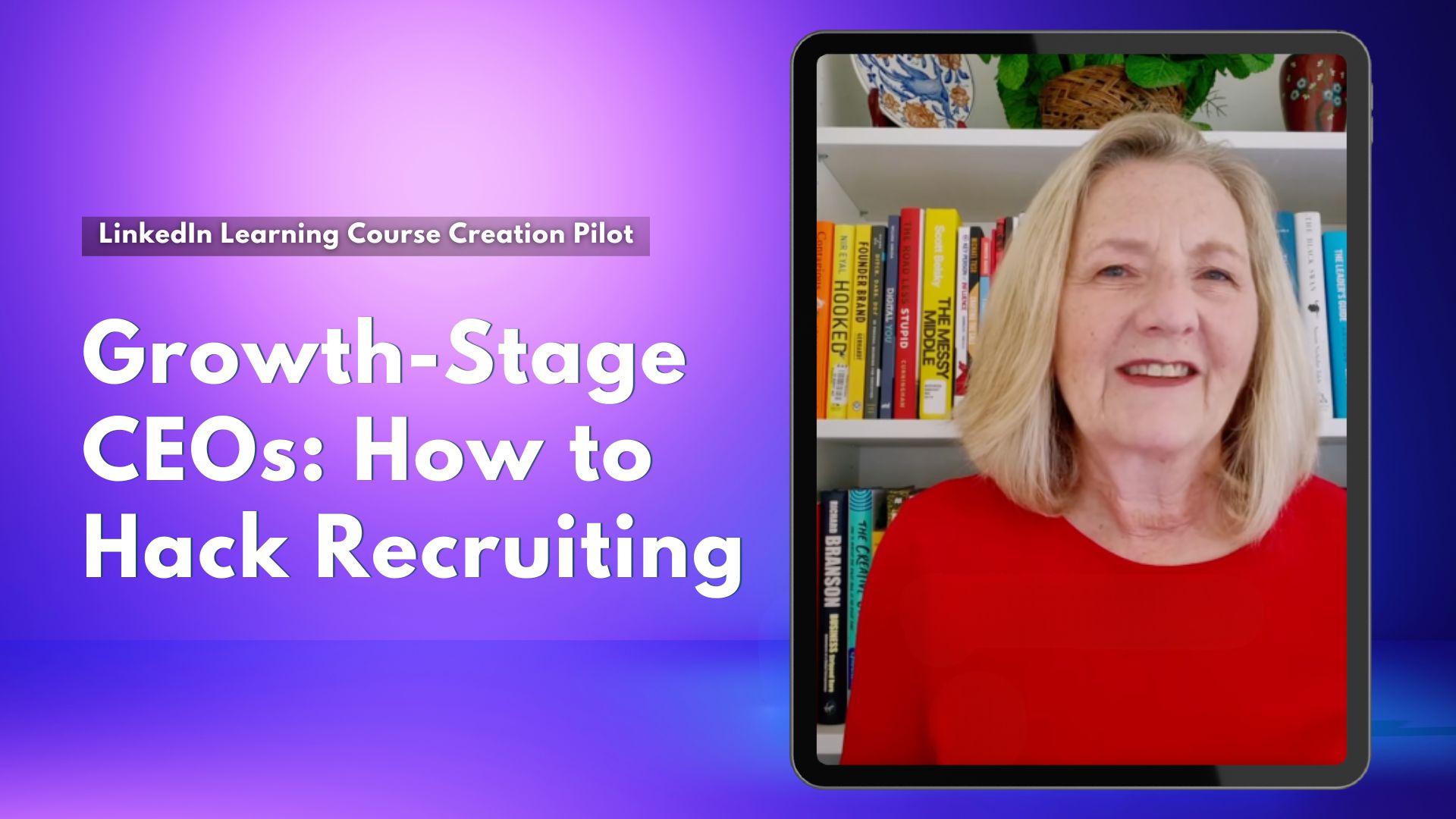
That’s why I recently created a short video series for LinkedIn Learning on how CEOs can use LinkedIn more intentionally to support recruiting and hiring.
The course is designed specifically for growth-stage CEOs who want to attract stronger candidates, communicate culture more effectively, and reduce hiring friction as the company scales.
What If You Could Hire Great People Faster?
Most CEOs don’t realize how much their personal presence impacts recruiting.
When leaders use LinkedIn strategically, they attract candidates who are aligned not only with the role, but also with the company’s culture and leadership style.
The result is often faster hiring, fewer mismatches, and stronger long-term fits.
Magnetically Attract People Who Fit Your Culture
Culture is difficult to communicate through a careers page alone.
But when CEOs consistently show how they think, lead, communicate, and make decisions, candidates begin to self-select.
The right people lean in. The wrong people opt out before either side wastes time.
What Is the Hiring Signal Gap?
The most talented candidates care deeply about leadership.
If your public presence focuses entirely on company news while remaining silent on your values, leadership style, and decision-making, you may be hiding one of your company’s strongest recruiting assets: yourself.
First Steps to Fix the Hiring Signal Gap
Hiring is not just an HR function in growth-stage companies. It is a leadership challenge.
Long before candidates apply, they are watching how leadership communicates, how employees are treated, and how the company presents itself publicly.
This video covers practical ways CEOs can begin showcasing culture more intentionally on LinkedIn.
Show What Kind of Boss You Are
Candidates don’t just join companies. They join leaders.
If your LinkedIn presence says nothing about how you operate as a manager, communicator, or decision-maker, candidates fill in the blanks themselves.
This video explores ways CEOs can make leadership style more visible and tangible online.
How to Attract More People Like Your Best Employees
Your employees are watching your content too.
When leaders communicate culture effectively, employees are more likely to engage with and share that content.
And their networks are often full of people with similar skills, backgrounds, and values who may become future candidates.
Additional Resources
How the CEO’s Personal Brand Impacts Recruiting
The Five Essential Stories for Your Employer Brand
Employer Brand Checklist – Optimize your LinkedIn presence to support recruiting.
If you’re a growth-stage CEO and recruiting is becoming harder than it used to be, it may be time to think differently about visibility.
Your LinkedIn presence is no longer just about marketing or thought leadership.
It is part of how candidates evaluate whether they want to build with you.
When you’re trying to scale your company while competing for exceptional talent, that matters.
If you’d like help building a LinkedIn presence that strengthens recruiting, communicates culture more clearly, and helps attract the kind of people your company needs to grow, we’d be happy to talk.