



LinkedIn has become a powerful stage for leadership visibility. With more than a billion members and 67 million companies, it’s where conversations about innovation, trust, and leadership unfold every day. But how do CEOs actually use it? And what do they gain from showing up?
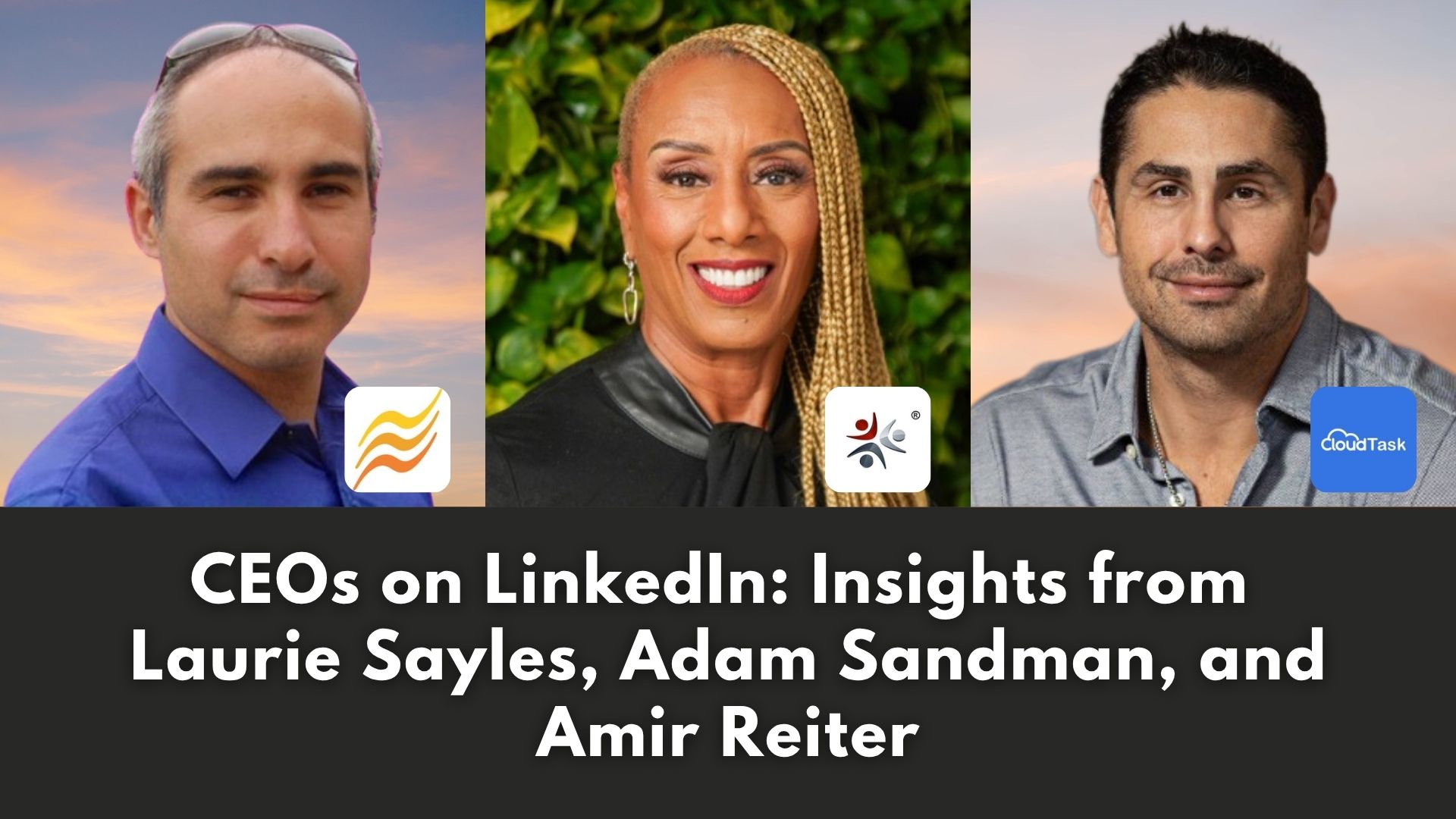
We spoke with three CEOs: Laurie Sayles of Civility Management Solutions, Adam Sandman of Inflectra Corporation, and Amir Reiter of CloudTask, to learn how they approach LinkedIn, what works, and what advice they’d give other leaders.
Key Takeaways:
-
LinkedIn is not solely for self-promotion. It is a platform where CEOs lead through their presence, not just their title.
-
Consistency is more important than style. Delegated, do-it-yourself, or hybrid approaches can all be effective.
-
Authenticity is most effective. Personal stories and reflections resonate more than polished announcements.
-
Purposeful engagement builds trust faster than frequent posting alone.
-
Digital visibility is valuable only when it leads to real-world relationships and tangible results.
Why LinkedIn Is Worth a CEO’s Time
For Adam Sandman, visibility isn’t about vanity metrics. It’s about credibility and connection. “You want to be someone people can trust and engage with,” he says. “People do business with people they know, like, and trust. LinkedIn is a way to project that without always being in the room.”
Laurie Sayles sees it as a natural extension of business itself. “LinkedIn lets you introduce yourself to the world,” she explains. “You can connect with people before meeting them and show what you stand for.”
And while Amir Reiter admits to having a love-hate relationship with the platform, he acknowledges its value in finding “your tribe,” the people who resonate with authenticity. “You find people who are quiet but value honesty and directness,” he says. “Those are the relationships that matter.”
Taken together, their views reveal a clear message: for CEOs, LinkedIn isn’t about self-promotion. It’s about presence. Whether you’re cultivating trust, sharing expertise, or connecting with values-aligned peers, the platform offers a way to be seen as a leader in your field, not just a figurehead.
How They Use LinkedIn Day to Day
Each CEO approaches LinkedIn differently, but consistency is the common thread.
Laurie Sayles uses it as an ongoing relationship builder. “If I’m at an event and hear about someone I should know, I go straight to LinkedIn to connect,” she says. With the help of her branding manager, she maintains a consistent posting rhythm that reflects her voice and values, a model of how thoughtful delegation can keep a CEO active without diluting authenticity.
Amir Reiter takes a hands-on approach: creating daily content, hosting webinars, and participating in roundtables. “It’s a lot, but it’s how I stay visible,” he says. Yet even he finds the balance tricky: serious business posts tend to underperform compared to more personal ones. “It’s frustrating,” he admits, “but that’s the reality of the platform.”
Adam Sandman strikes a middle ground. His focus is on storytelling and education. “The best posts tell a story, educate, or provoke thought without being polarizing,” he explains. “It’s not about the number of likes. It’s about engagement and building trust.”
Their approaches illustrate the flexibility of the platform: some CEOs delegate, some lead the charge personally, and others strike a balance. All succeed by showing up consistently and authentically.
What Works and What Doesn’t
When it comes to content, all three agree that authenticity wins.
Laurie Sayles gravitates toward positivity and meaning. “Civility and truth, that’s what matters,” she says. Her content avoids political noise and focuses on constructive ideas that inspire.
Adam Sandman finds that sharing lessons and reflections sparks deeper engagement than announcements or metrics. “People want to connect with your experience, not just your success,” he notes.
Amir Reiter’s experience highlights the platform’s quirks. Technical or serious posts often underperform, while personal stories and humor travel further. Yet he sees value even in the imperfection. “It’s not always fair,” he says, “but it’s still a place to find the right people.”
Their experiences underscore an important point for CEOs: LinkedIn rewards human content. The more relatable, reflective, and story-driven your posts are, the stronger your presence will be.
Advice for CEOs Starting Out
Every CEO we spoke with emphasized the importance of starting with purpose.
“Know your audience and your why,” says Adam Sandman. “Engagement matters more than frequency. Comment and interact. That builds credibility faster than posting alone.”
Laurie Sayles recommends starting with the people who add value to your life and business. “Even if you can’t meet them in person right away, you can begin building community,” she says.
Amir Reiter agrees: “Create a good profile, post consistently, and build real relationships. LinkedIn helps you find your tribe, but it’s up to you to nurture those connections.”
Their advice boils down to this: be strategic, be real, and be patient.
Lessons Learned
After years of showing up, all three CEOs have learned that engagement beats exposure.
Adam Sandman finds commenting and conversation to be even more impactful than posting. “Engagement builds trust,” he says. “Show up for people.”
Laurie Sayles stresses authenticity: “You attract the right people by being genuine. LinkedIn is a place to express your values and personality.”
Amir Reiter reminds us that relationships don’t end on the platform. “Consistency is key. But go beyond LinkedIn. Email, call, join communities. That’s how real relationships grow.”
For CEOs, the takeaway is clear: LinkedIn may start online, but the best outcomes happen when digital visibility turns into real-world trust.
Make LinkedIn Work for You
Laurie, Adam, and Amir show that there’s no one formula for success on LinkedIn. But there is a shared mindset: show up with purpose, consistency, and authenticity. When CEOs use LinkedIn as a leadership tool rather than a marketing channel, the ripple effects reach far beyond engagement metrics.
Your voice shapes how customers, partners, and talent see your company. Your presence sets the tone for how people experience your brand.
If you’re ready to refine your approach and build a stronger CEO presence on LinkedIn, our team can help. Reach out directly on LinkedIn or book a consultation. Let’s make your leadership more visible.